
CLEANING GUIDES
How to Plan Cleaning After Building or Renovation Work
| Guide | What you will find |
|---|---|
| What it covers | Plan the final clean after renovation. Check unfinished work, building waste, new finishes, room details and the timing of furniture deliveries before booking. |

Find out what will be finished before the clean
| Before choosing a date | What to check |
|---|---|
| The last building jobs | Ask the builder which jobs remain and when they expect to finish. Tell the cleaning company about any sanding, fitting or other dusty work still planned, so you can choose a date after those jobs are complete. |
| Trades returning later | Check whether decorators, fitters or electricians will return after the proposed clean. Their work may bring new dust or marks into a finished room, so discuss the order before booking cleaning immediately ahead of another trade. |
| Building waste | Arrange the removal of leftover boards, rubble, packaging and other building waste separately. Explain what will remain on site, because cleaning settled dust from a room is different from clearing materials that still cover its floor. |
| Temporary protection | Agree with the builder who will remove floor coverings, protective film or fitted protection, and when. Do not pull unfamiliar coverings off new finishes just to prepare for cleaning; ask about their removal before the appointment. |
| Working facilities | Tell the company if water or electricity will be unavailable, or if essential fittings are still being installed. This lets you discuss the cleaning date before planning around a room that is not ready to be used. |
| Only some rooms are ready | List the rooms that are finished and explain any work continuing nearby. A partial clean needs that information, especially if workers or materials must pass through the finished rooms to reach another part of the property. |
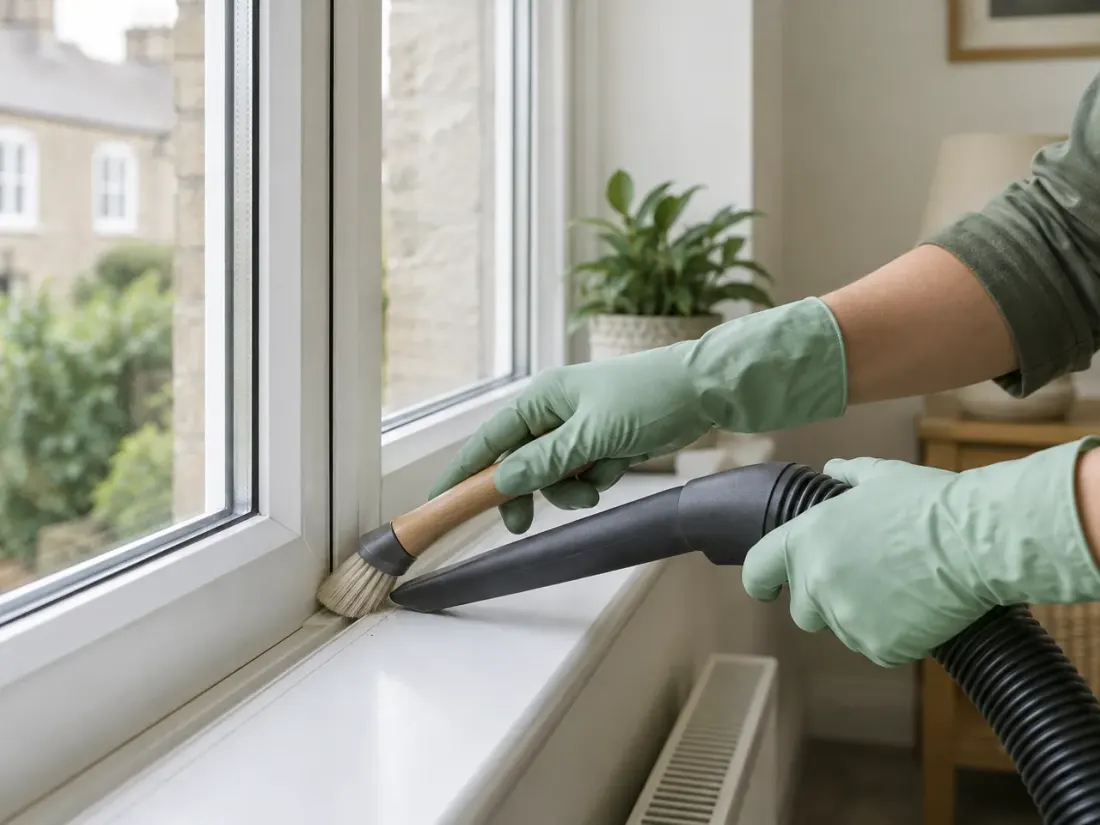
Dust, paint spots and other marks
| What to show | Why it helps the plan |
|---|---|
| A view of each room | Take wider photographs showing floors, fittings and furniture staying in the room. These explain the cleaning better than close-ups alone, which may hide the size of the room or how much of the floor is covered. |
| Dust on ledges and fittings | Point out settled dust on ledges, shelves and other details that are easy to miss in a general room photo. Include their height and position so the cleaning conversation covers those surfaces as well as the floor. |
| Paint spots | Show paint marks close up and include the surrounding surface in another picture. The material beneath the mark matters, so avoid trying different removal products before the builder and cleaning company have discussed the new finish. |
| Adhesive and protective labels | Photograph remaining labels, adhesive marks and any product information left by the installer. Ask who should deal with them before removing unfamiliar material from glass, cabinets or fitted furniture that has only recently been installed. |
| Residue on floors | Show the floor across the room as well as any concentrated patches. Tell the cleaner what the flooring is and what building work took place there, rather than calling every visible mark ordinary household dirt. |
| Unfinished or damaged areas | Point out chipped fittings, loose parts or unfinished work separately from dust and dirt. Ask the builder about those items first, so the cleaning list does not become a list of repairs that still need completing. |
Looking after new floors and fittings
| New surface | Information worth keeping |
|---|---|
| New flooring | Keep the flooring product details and the installer’s cleaning instructions together. Ask when the finish is ready for cleaning and pass those notes to the company, instead of assuming it can be treated like the old floor. |
| Timber and finished woodwork | Tell the cleaner which woodwork has been newly fitted, painted or treated. Include care notes for floors, doors and trim where available, especially when different finishes have been used in neighbouring rooms during the same renovation. |
| Freshly painted surfaces | Ask the decorator when painted surfaces can be cleaned and whether any particular care is needed. Give that answer to the cleaner rather than choosing a cleaning date solely because the paint looks finished in photographs. |
| Glass and window coatings | Send product or installer information for new glazing and applied films. Point out stickers, paint or adhesive on the panes, and discuss them before expecting ordinary window cleaning to include every type of building residue. |
| Tiles and surrounding finishes | Keep information about the tiles, grout and any surface treatment used. Ask the installer about residue left after fitting, so you can distinguish their finishing work from the later cleaning of the completed bathroom or kitchen. |
| Worktops and fitted units | Pass on care instructions for the new worktop and cupboard finishes. Show any marks or leftover protection, and ask the fitter about incomplete work before arranging cleaning around handles, edges or panels that have not been finished. |

Make a room-by-room cleaning list
| Room or area | Details to include |
|---|---|
| Kitchen | List worktops, sink, cupboard fronts and any empty interiors you want cleaned. Explain which appliances are new or still in use, and name any inside-appliance cleaning separately rather than relying on the word kitchen to cover everything. |
| Bathrooms | Include the bath or shower, toilet, basin, mirrors and floor that need cleaning. Tell the company about fittings still being worked on and share the installer’s notes for new glass, tiles or finished surfaces. |
| Bedrooms and living rooms | List dusty ledges, furniture surfaces and floor areas in the rooms affected by the work. Show what furniture will stay and mention neighbouring rooms that collected dust even though no building work took place inside them. |
| Stairs and entrances | Include the hall, private stairs and landings used to carry materials through the home. These areas can be missed when the conversation centres on a new kitchen or bathroom, even though they also need cleaning after the project. |
| Utility rooms and storage | Say whether utility rooms, pantries or storage cupboards need cleaning too. Empty the interiors you want wiped and tell the company about equipment or stored materials that will remain, so those areas are not described as clear. |
| Extra glass and outside areas | Ask separately about glazed doors, roof panels, outside windows or other areas beyond the rooms listed. Give their position and condition before adding them to after builders cleaning, particularly where reaching the glass needs more discussion. |
Get the property ready for the appointment
| Practical job | What to arrange |
|---|---|
| Materials left in rooms | Ask who will remove the remaining building supplies and packaging before the clean. If some items must stay, show their position so the cleaner knows which floors and surfaces will be clear when the appointment begins. |
| Furniture and deliveries | Plan furniture deliveries around the cleaning where possible, or explain what will already be in the rooms. Tell the company about heavy pieces before expecting flooring behind or beneath them to be included without further discussion. |
| Connected appliances | Explain which machines will stay connected and where they stand. Do not plan on the cleaner disconnecting or pulling out fitted equipment to reach hidden flooring; discuss any necessary movement with the people responsible for the installation. |
| Keys and entrances | Confirm who will open the property and any side gates, communal doors or locked rooms needed for the visit. Give the right contact details, especially when the builder rather than the occupier is still holding the keys. |
| A contact for questions | Choose someone who can answer questions about the building work, new finishes and rooms to clean. If several people are involved, agree who gives instructions so the cleaner is not left with different answers from each person. |
| A changed finish date | Tell the cleaning company when building work slips or another trade needs longer than expected. Confirm any revised appointment rather than keeping the original date while the rooms, materials and entry plans are still changing. |

After the clean
| After the appointment | A useful next step |
|---|---|
| Before bringing everything back | Think about when furniture, boxes and everyday belongings will return to the rooms. Ask about using any separately cleaned carpets or upholstery before replacing items, instead of treating every floor and fabric as ready at the same time. |
| Looking over the rooms | Use your room list to look over the cleaned areas and the extra items you requested. Check the particular ledges, fittings or glass you discussed, and raise any concern with the cleaning company while the details are fresh. |
| A mark that remains | Show the surface and remaining mark to the cleaning company, with the product details you have. Avoid applying a stronger product straight away; first find out whether the mark is residue, existing damage or unfinished work. |
| Further work afterwards | If contractors return after the clean, their work may leave fresh dust or marks. Ask when the remaining jobs will finish and discuss whether a short follow-up visit or another clean would be useful afterwards. |
| Packing materials from deliveries | Allow for boxes and wrapping that arrive with furniture or replacement fittings. Decide who will remove the packaging and leave room for unpacking, so newly cleaned floors can stay clear as the furniture is put in place. |
| Returning to household cleaning | Once the building work is finished and the rooms are in everyday use, decide which housework needs repeating. Discuss regular cleaning for those jobs separately from any remaining project-related cleaning or extra specialist treatments you still want. |