CLEANING GUIDES
Office cleaning checklist: what to clean and how often
| Guide | What you will find |
|---|---|
| What it covers | Build a practical office-cleaning checklist for desks, kitchens, toilets and floors. Choose visit frequency around occupancy and the rooms people use. |

Start with the rooms people use
| Checklist item | Practical detail |
|---|---|
| Occupied desks | Count the desks people regularly use, not just the number of desks in the building. A largely empty office and a fully occupied one leave different amounts of everyday dust, crumbs and hand marks between cleaning visits. |
| Meeting rooms | Note how frequently meeting rooms are used and whether food or drinks are served there. A room used throughout the day may need more attention than a spare room that is opened only for an occasional meeting. |
| Shared kitchens | Include every kitchenette, tea point and staff dining table. Several small drink stations can create more separate cleaning jobs than one larger kitchen. Name them individually so the cleaner knows which worktops, sinks and floors to include. |
| Toilets and washrooms | List the washrooms staff and visitors use, including separate facilities on different floors. Basin splashes, toilet surfaces and floors need their own checklist entries. Do not let the most visible reception area take all the attention. |
| Reception and entrances | Entrances collect dirt brought in from outdoors, while reception furniture and tables show everyday use. Include mats and the flooring around them. These areas may need attention at a different rate from a quiet room upstairs. |
| Private and shared parts | Distinguish your office rooms from a building’s communal corridors, lifts and toilets. Check who arranges cleaning for those parts. A company hiring a cleaner for its own rooms should not accidentally duplicate the building manager’s existing service. |
Desks, meeting tables and furniture
| Checklist item | Practical detail |
|---|---|
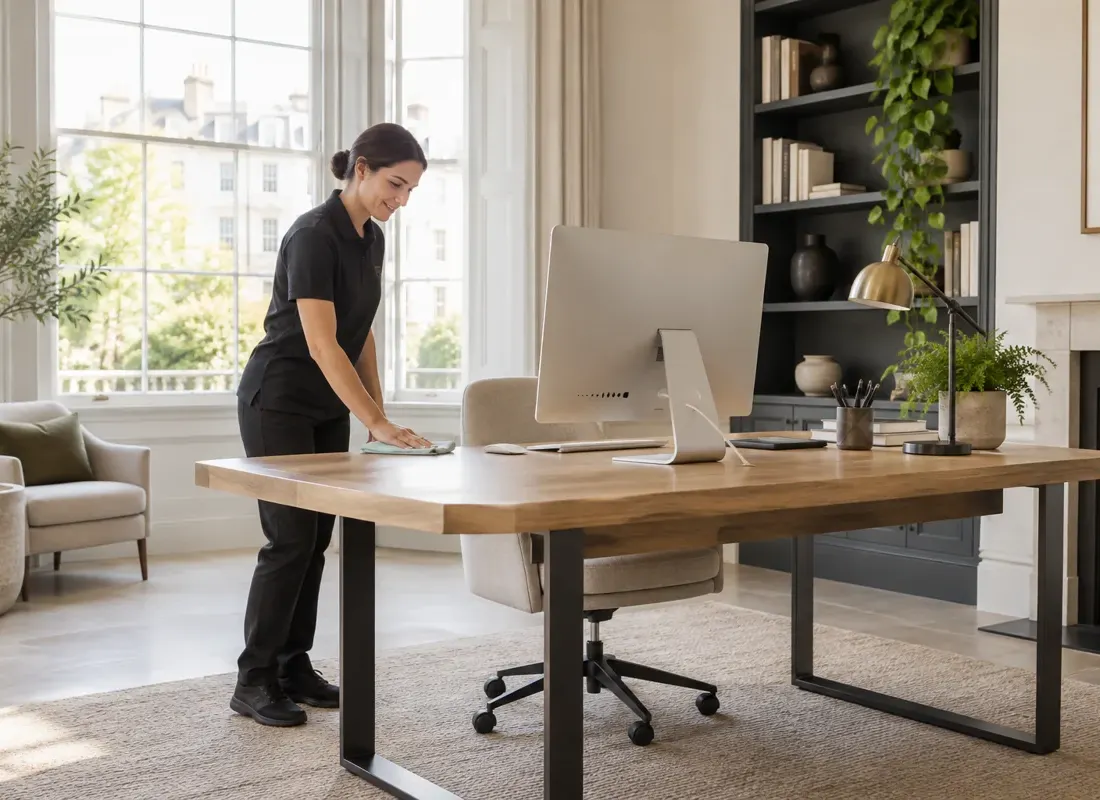
| Clear desktops | A clear desktop allows the surface to be wiped without sorting papers or moving small personal possessions. Agree how staff should leave desks before the visit. Cleaning a desk is different from organising someone’s paperwork and deciding where it belongs. |
| Meeting tables | Remove cups, food packaging and confidential papers before the table is cleaned. Include the tabletop and reachable edges. Where meeting rooms are busy, agree when the room will be free rather than expecting cleaning to happen around a live meeting. |
| Chairs | Chair frames and fabric seats are different cleaning tasks. Say whether you want reachable hard parts wiped or upholstery cleaning quoted separately. A routine office visit should not be taken to mean a deep clean of every fabric chair. |
| Screens and keyboards | Ask separately about electronic equipment and follow its manufacturer’s care instructions. A desk-cleaning agreement does not automatically include opening equipment or using products on screens. Staff can identify equipment that must remain switched on or undisturbed during the visit. |
Staff kitchens and places to eat
| Checklist item | Practical detail |
|---|---|
| Worktops | List clear worktops used for preparing drinks and meals. Wiping crumbs, splashes and food residue is straightforward to describe. Staff should put away personal food and utensils first so the surface can be cleaned without guessing what to keep. |
| Sink and taps | Include the sink bowl, rim, taps and draining area. A sink full of personal dishes changes the job, so decide who handles washing-up. Do not leave responsibility unclear and discover that neither staff nor the cleaner expected to do it. |
| Cupboard fronts | Doors and handles can be wiped while the cupboards stay closed. Internal cupboard cleaning is a separate request that needs empty space. Make that distinction in the checklist rather than writing cupboards and expecting everyone to understand the same task. |
| Appliance exteriors | Specify the outside of the fridge, microwave and other kitchen appliances you want wiped. Inside cleaning should be listed separately. Removing old staff food and deciding what can be thrown away belongs with someone authorised to make that decision. |
| Dining tables | Include tables where staff eat, along with reachable edges and the surrounding floor. Ask users to remove lunch containers and personal items. Regular wiping will not repair a chipped surface or remove damage caused by heat or previous use. |
| Bins | Agree which bins are emptied and where the contents go within the building’s arrangements. Tell the cleaner about recycling separation. This avoids treating an unlabelled container of paperwork or reusable packaging as ordinary rubbish that should automatically be discarded. |
Washrooms, floors and frequently handled fittings
| Checklist item | Practical detail |
|---|---|
| Toilet surfaces | List the toilet bowl, seat, lid and outside surfaces, followed by the surrounding floor. Include toilets on each floor and check that these jobs have time on the cleaning list, alongside reception areas, desks and meeting rooms. |
| Basins and mirrors | Include basin bowls, taps, surrounding ledges and mirrors. These collect water marks, soap residue and splashes during ordinary use. Mention broken fittings or leaks so cleaning is not confused with fixing the reason a surface repeatedly becomes wet. |
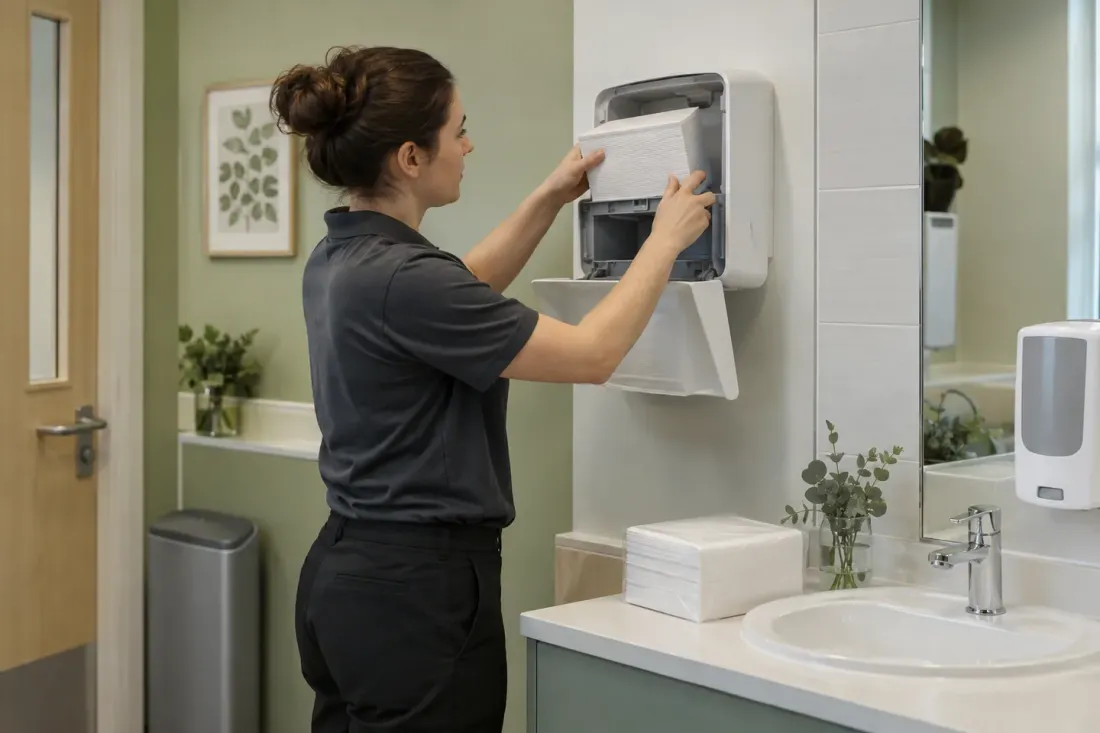
| Washroom supplies | Decide who checks and refills soap, toilet paper and other consumables. Refilling and supplying stock are different things. If the cleaner will refill dispensers, make sure the right supplies are available and the dispenser can be opened. |
| Hard floors | Identify hard-floor areas separately from carpeted rooms. Dirt, spillages and the floor finish affect the cleaning needed. Keep the flooring manufacturer’s instructions available where you have them, particularly for a specialist finish or a recently installed floor. |
| Carpeted floors | List the carpeted rooms and paths used most often. Routine vacuuming and specialist carpet cleaning are different jobs. Ask separately about spills, ingrained marks or fabric treatment rather than expecting an ordinary visit to include full carpet extraction. |
| Doors and switches | Door handles and reachable switch plates are useful checklist entries in shared rooms. Make clear which fittings are included. Cleaning does not mean opening electrical fittings, repairing loose switches or trying to remove damage from a painted door. |
Choosing how often to book
| Checklist item | Practical detail |
|---|---|
| Start with occupancy | Consider how many people use the office on the busiest days and how long they stay. Hybrid working can leave certain days much busier than others. A useful cleaning pattern follows that use rather than an unchanged headcount on paper. |
| Watch the kitchen | Check how the kitchen looks before the next planned visit. Crumbs, sticky marks and overflowing bins suggest that everyday tasks need attention sooner. Increasing kitchen attention does not necessarily mean every quiet office room needs the same extra work. |
| Look at entrances | Entrance floors and mats may need attention before quieter interior rooms, especially when more dirt is being brought in. Review what you see rather than setting a rigid interval for every floor solely because they share the same address. |
| Separate regular and occasional jobs | Regular wiping, vacuuming and bin emptying can sit alongside occasional deeper work. Examples include cupboard interiors and specialist upholstery cleaning. Give those tasks their own place on the plan instead of expecting every routine visit to cover them all. |
| Review after a few visits | Ask staff responsible for the workplace to note recurring problems before changing the whole arrangement. A missed sink and an infrequently cleaned office are different issues. Feedback should name the task and room so the provider can respond usefully. |
| Allow for changing use | Update the cleaner when a team moves in, a meeting room becomes a permanent workroom or refurbishment changes the layout. More occupied space can change cleaning time. Do not rely on a quotation describing rooms that are no longer used that way. |
Choosing a time and preparing the workplace
| Checklist item | Practical detail |
|---|---|
| Busy and quiet periods | Discuss when rooms will be free and which parts can be cleaned while staff remain elsewhere. Ask the provider about available appointments. Do not take an evening or weekend preference as a confirmed appointment until it has been agreed. |
| Entry and locking up | Agree who lets the cleaner in and who is responsible for locking up. Provide the necessary instructions through the agreed contact. Avoid relying on a staff member who may be absent or leaving the building unexpectedly that day. |
| Confidential information | Ask staff to put away confidential papers before cleaning. Identify rooms or storage that should remain closed. This makes the cleaner’s job clearer without expecting them to judge which documents are private or move papers around a shared desk. |
| Floors drying | Plan floor cleaning so people do not walk straight over a wet surface. The HSE cleaning guidance explains that wet floors and trailing equipment can create slip or trip risks. Discuss timing and keep a dry way through where needed. |
A short checklist for comparing quotations
| Checklist item | Practical detail |
|---|---|
| Compare the same rooms | Give each provider the same room list and regular jobs. Explain any occasional work separately. A price is easier to judge when you know whether it covers the kitchen, washrooms and floors you expect, rather than just a stated number of hours. |
| Ask about equipment | Check who supplies cleaning equipment and products, and where anything kept on site can be stored. Tell the provider about building restrictions. Having this conversation avoids discovering at the first visit that each side expected the other to provide something. |
| Discuss the visit length | Ask how the proposed time relates to the rooms and tasks listed. If the priorities exceed the available time, decide what changes. A longer checklist does not mean all its jobs can fit into the same short visit without compromise. |
| Keep the service description | Retain the agreed room list, frequency and price, then update them when the office changes. For a quotation covering your own workplace, use our office-cleaning service page and describe the rooms, occupancy and regular tasks you need help with. |