
CLEANING GUIDES
How to get a clear carpet cleaning quote
| Guide | What you will find |
|---|---|
| What it covers | Measure rooms and stairs, describe carpet fibres and stains, and compare what a carpet cleaning quote includes before arranging the visit. |
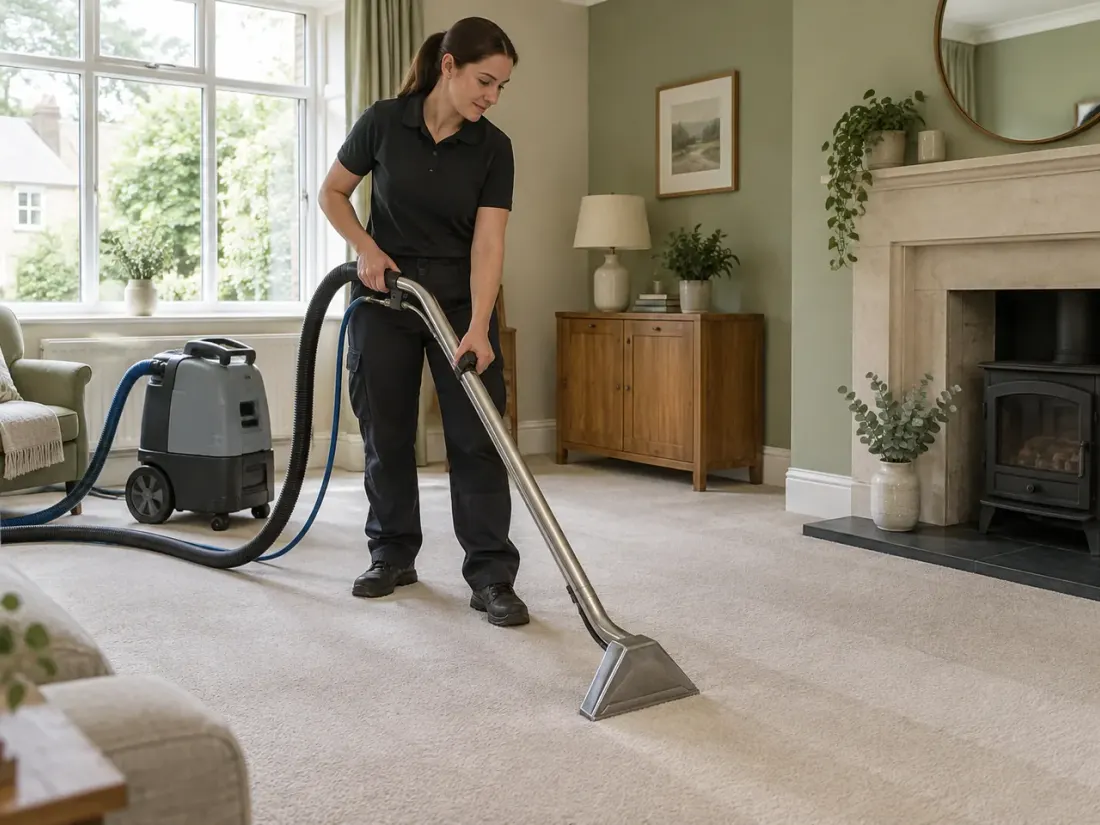
Start with the carpets you need cleaned
| Your choice | Why it matters |
|---|---|
| Whole rooms | List each carpeted room by its everyday name, such as front bedroom or sitting room. A clear list makes it easier to compare a price with the rooms you expect to have cleaned. |
| One marked area | Explain whether you need a full room clean or advice about one stain. A small visible mark and the surrounding carpet may need different discussion from cleaning the entire floor in that room. |
| Stairs and landings | Include stairs and landings separately from bedrooms. A room count does not describe the number of steps, their shape or the carpet on the connecting landing, so these areas need their own entry. |
| Rugs | Put loose rugs on a separate line, even when they sit over fitted carpet. Give the rug dimensions and any label information, rather than counting it as another carpeted room or leaving it unnamed. |
| Furniture that stays | Mention large wardrobes, beds and other furniture that will remain in place. The exposed floor can differ greatly between an empty-room photograph and a furnished room, especially where storage covers most of the carpet. |
| More than one address | Keep separate properties in separate lists. This avoids mixing a bedroom at one home with stairs at another, and helps you check which address, rooms and appointment the final price is intended to cover. |
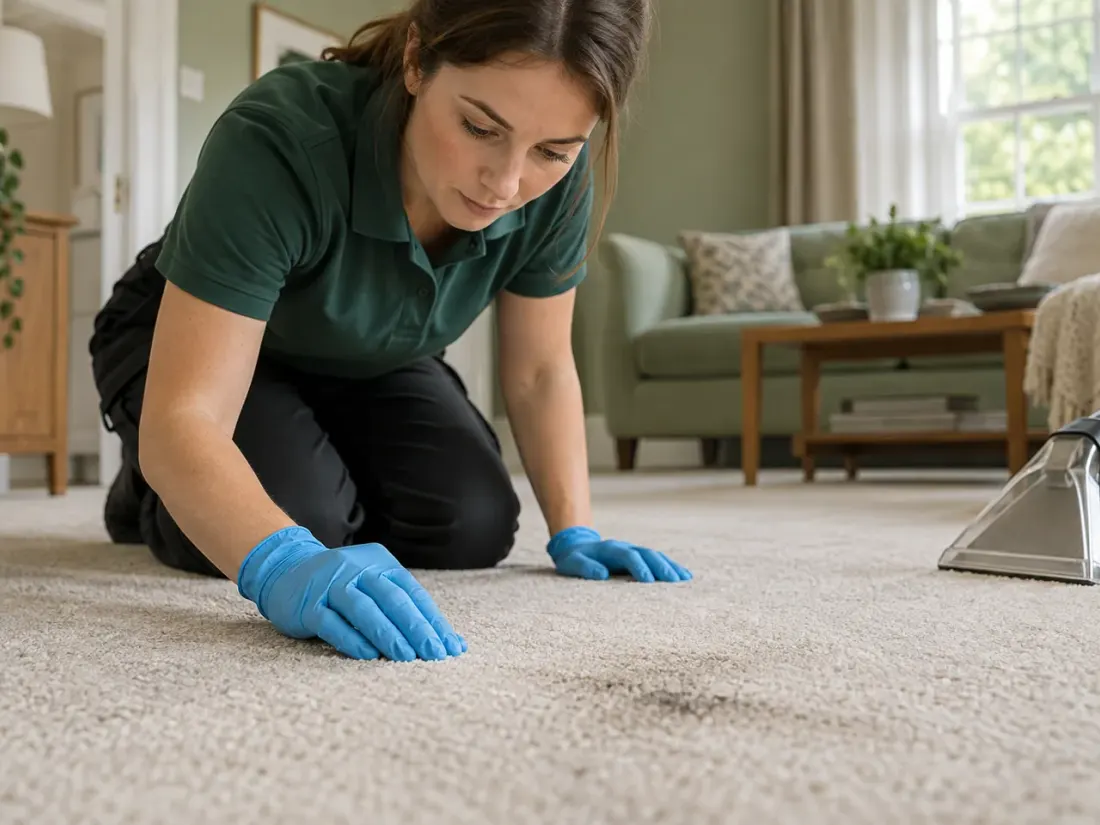
Measuring rooms for a carpet cleaning quote
| Room shape | What to record |
|---|---|
| A rectangle | Record the room’s length and width in the same unit and write its name beside the measurements. If you can only estimate, label the dimensions as approximate and ask whether they need checking. |
| An L-shaped room | Draw the outline as two rectangles and note both sets of measurements. This keeps the smaller return in the description rather than measuring only the room’s longest walls. |
| Alcoves and bays | Photograph a deep bay or carpeted alcove and say whether its floor continues from the main room. The extra area may not show in a doorway photograph. |
| Doorways | Say whether carpet continues through a doorway into a hall or another room. Naming the connecting area helps both people picture the same floor when discussing the price. |
| Fitted storage | Show fitted storage covering part of the floor. Do not crawl behind furniture to measure hidden carpet; photographs and a note about what stays explain the exposed areas. |
| Uncertain dimensions | If measuring is awkward, send a room photograph and describe its approximate size. Ask whether the cleaner can check the dimensions before confirming the total price. |
Stairs, landings and runners
| Stair detail | Useful information |
|---|---|
| Treads and risers | Count the steps and say whether carpet covers both the horizontal tread and the upright riser. A photograph from a clear position helps explain the arrangement without requiring specialist staircase names or a drawing to scale. |
| The landing | Record the landing separately, including any corridor that continues from it. A broad landing with several doors has more carpet than a small turning space, even when both connect the same number of bedrooms. |
| Turning steps | Photograph steps that turn around a corner or change width. This shows the shape more clearly than calling the flight standard, and lets you ask how the stairs will appear on the itemised quotation. |
| A stair runner | Explain that the carpet is a runner rather than full-width fitted carpet. Show its edges and the uncovered stair beside it, without lifting the runner or disturbing how it is attached to the staircase. |
| Stair rods | Mention rods or other decorative fittings and ask what preparation, if any, is needed. Do not take fittings apart simply to obtain a quote; a photograph can show them while they remain in place. |
| Loose carpet | Point out loose edges, pulled sections or an existing trip concern before arranging cleaning. Cleaning and refitting are separate matters, so a price for removing dirt should not be read as a repair to the staircase carpet. |

Finding out what your carpet is made from
| Information | How to use it |
|---|---|
| Purchase paperwork | Look for the carpet name on an invoice, sample or fitting document. Send the name as written, including any range details, rather than choosing a fibre description because the carpet looks similar to another one. |
| Fibre composition | Pass on a label that states the fibre or blend. If the paperwork gives percentages, keep them with the product name; describing a carpet only as soft, thick or pale does not communicate that information. |
| Care instructions | Keep the manufacturer’s care guidance with your enquiry. Its recommendations belong to that product, and should be read before choosing a treatment rather than replaced by a general cleaning suggestion found for a different carpet. |
| Construction details | Photograph loops, pile texture or a distinctive weave where these are easy to see. You do not need to name the construction correctly yourself; a clear close-up can support the product information you already have. |
| Missing labels | Say that the fibre is unknown if you cannot find a reliable record. This leaves room for the cleaner to discuss the carpet with you, instead of planning around an uncertain material stated as a fact. |
| Manufacturer reading | The Brockway carpet care guide explains how wear and changes in pile appearance affect a carpet’s looks. Keep the instructions for your own carpet with the enquiry, particularly if it has a specialist finish or construction. |
What to tell the cleaner about stains
| Stain detail | What helps the discussion |
|---|---|
| The spill | Say what was spilled if you know, such as tea, food or ink. If you do not know, describe what you can see rather than assigning a cause from the colour alone or someone else’s guess. |
| When it happened | Give an approximate date or say the stain was already present when you moved in. This is more useful than trying to reconstruct an exact time, and helps separate an old mark from a recent accident. |
| Earlier attempts | List products or treatments already used on the area, including a photograph of the container if you still have it. This is information for the cleaner, not a reason to add another product before the appointment. |
| Close and wide views | Take one photograph of the mark and another showing its place in the room. The close-up shows the detail, while the wider view explains its size and whether it sits beneath furniture or near a doorway. |
| More than one mark | Explain which stains concern you most and show whether they are isolated or spread across the room. You do not need to send identical pictures of every small spot to make a useful first enquiry. |
| Wear and damage | Show worn patches, loose fibres or colour changes as well as dirt. Cleaning does not replace missing carpet fibres, and a discussion about stains should leave room for marks that may remain after the carpet is cleaned. |
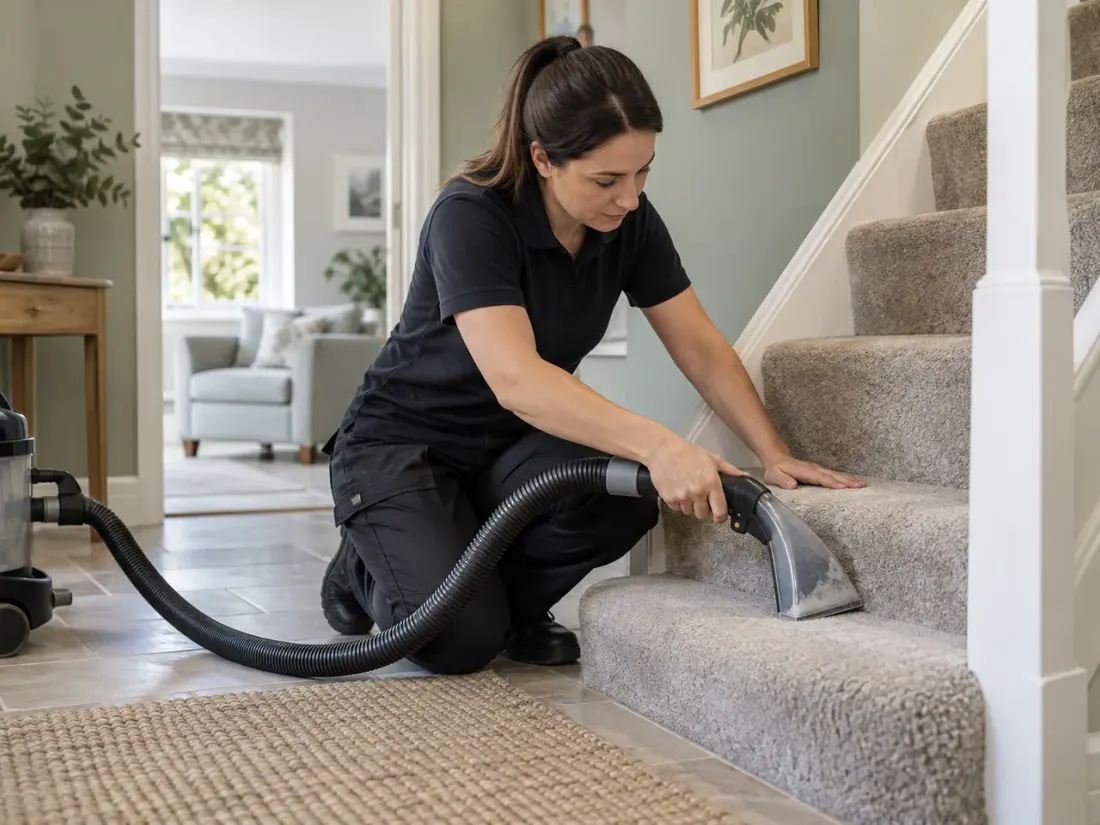
Read the quotation before comparing totals
| Check | A question worth asking |
|---|---|
| The room list | Check each room, stair flight and landing against the price. A quote including the landing describes a different job from one leaving it out, even when both name the same bedrooms. |
| Minimum bookings | Ask whether a minimum booking applies. A starting amount for one area may not describe the total for a small visit, so check the final charge before confirming. |
| Extra stain work | Ask how the photographed stains appear in the quote. Keep the answer with your room list so general carpet cleaning and any extra treatment for specific marks remain clear. |
| Furniture movement | Confirm what stays and who clears small items. A room price is not an agreement to dismantle furniture or move every heavy piece, so discuss blocked areas beforehand. |
| Drying advice | Ask about using the carpet after its chosen treatment. Do not plan around a drying time borrowed from another home, which may have a different carpet or cleaning treatment. |
| Dates and entry | Confirm the date and entry after checking the room list. Asking about a preferred day does not confirm an appointment, particularly when someone else is opening the property. |
Getting ready for the carpet clean
| Before and after | A practical step |
|---|---|
| Small belongings | Put shoes, toys and papers in their usual storage before the visit. This exposes the carpet without leaving the cleaner to decide where your belongings belong or whether to discard them. |
| Heavy furniture | Discuss heavy furniture beforehand rather than lifting it for photographs. Show what stays and the floor around it, so the planned cleaning matches the furnished room. |
| Care information | Have the product details ready. If someone else provides entry, give them the care instructions and ask them to point out the stains or damage you discussed. |
| Returning to the room | Follow the advice for your cleaned carpet before normal use. Ask about furniture or daily access if anything is unclear, instead of substituting a timetable from another guide. |
| Looking over the result | Compare the cleaned areas with your list and locate any remaining mark. A photograph of one patch explains a concern more clearly than saying the whole carpet looks different. |
| Your next step | Bring your room sizes, carpet information and stain photographs together when asking about carpet cleaning. The cleaner can use these details to explain the proposed treatment and give you a clearer price for the rooms involved. |