
CLEANING GUIDES
Upholstery cleaning: care labels and preparation
| Guide | What you will find |
|---|---|
| What it covers | Understand which sofa details, care instructions and stain photographs help before upholstery cleaning, and prepare your furniture without guessing a treatment. |
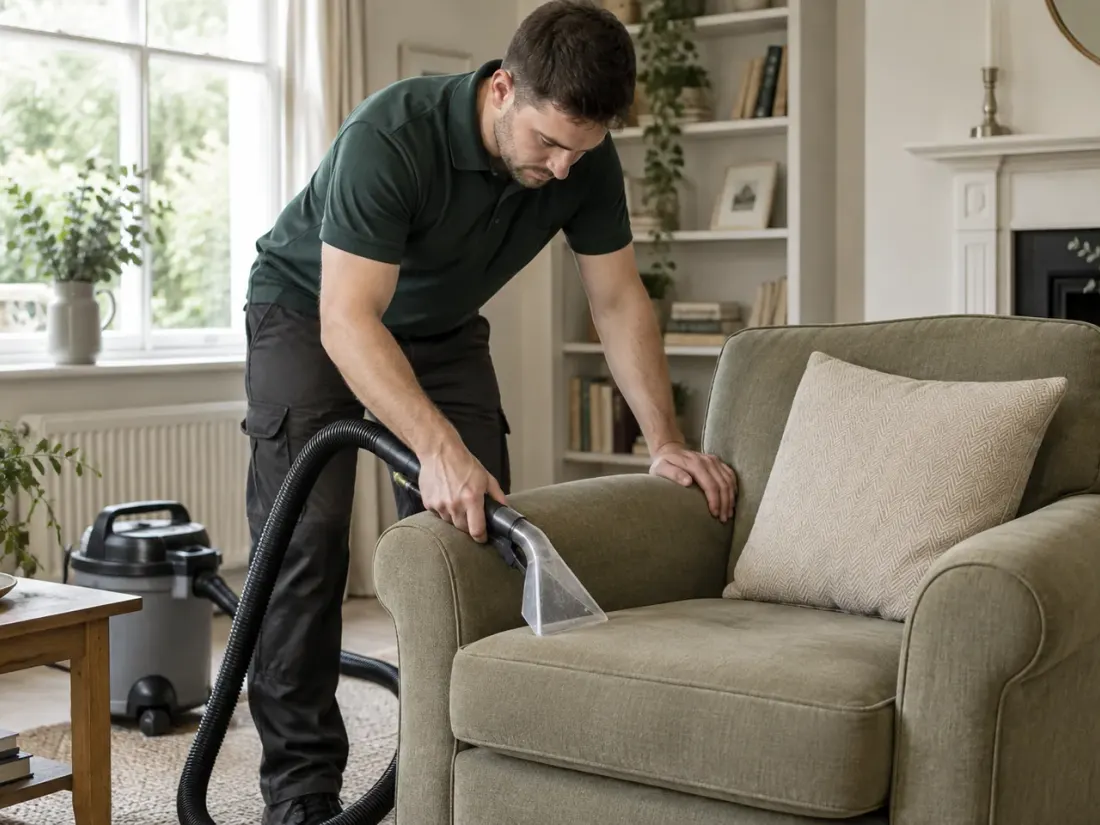
Which furniture needs cleaning?
| Furniture | A useful distinction |
|---|---|
| The main sofa | Describe the sofa’s size and shape, including a chaise or corner. A whole-piece photograph explains its layout more clearly than seat count alone when there are extra upholstered sections. |
| Matching armchairs | List matching armchairs individually, especially when only one needs cleaning. Keep a written item list alongside the suite photograph so the number of pieces being priced stays clear. |
| Dining chairs | Count the dining chairs and show whether fabric covers the seat, back or both. A padded seat differs from a chair upholstered around its frame and legs. |
| Footstools | Add a footstool separately, with its dimensions if convenient. It may share the sofa’s fabric but still be overlooked when a price or appointment description only names the larger seating pieces. |
| Loose cushions | Say whether you are asking about cushions belonging to the furniture or separate decorative cushions. Keep their care information with them, particularly when they were bought elsewhere and do not match the sofa. |
| A single favourite chair | You can begin with the one item that needs attention rather than describing every fabric object in the room. A short, accurate furniture list makes it easier to compare the treatment being discussed. |
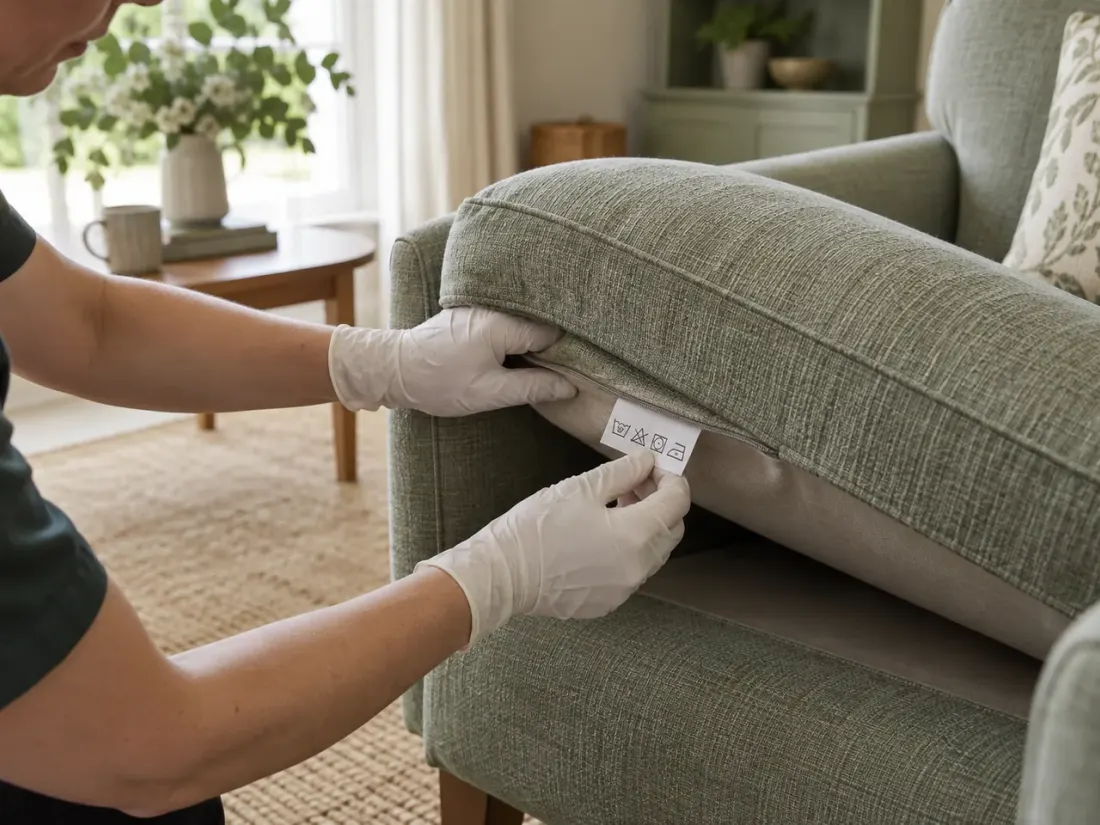
Where to find upholstery care instructions
| Document or label | What it can tell you |
|---|---|
| The product name | Look for a receipt, order email or manufacturer name before guessing the fabric. A product name can help you find the matching care guide, especially when a furniture range offers several different coverings. |
| The care label | Photograph the complete care label, including symbols and surrounding words. A cropped picture of one letter can lose the instruction beside it, leaving the person reading it without the same information you have. |
| Fabric composition | Keep fibre or covering details exactly as written on the label. Describing upholstery only as soft, smooth or velvety does not replace the product information, even if the appearance seems familiar. |
| Other labels | Check what a label is describing before treating it as cleaning advice. Product, filling and safety information may sit beside care instructions; send the complete label rather than interpreting a fragment yourself. |
| The manufacturer’s guide | Use the instructions for your own furniture before following general tips. The DFS upholstery care guide also gives priority to product-specific care documents. Its advice should not be transferred automatically to a different maker’s sofa. |
| A missing label | If the label is missing or unreadable, say so and send photographs. This is a useful starting point for discussion; an uncertain fabric name should not become a confident description simply to complete an enquiry. |
Take photographs that show the furniture clearly
| Photograph | Why it helps |
|---|---|
| The whole item | Stand far enough back to show the sofa or chair from end to end. This records its shape and upholstered sections, and prevents a close-up stain picture from becoming the only view of the furniture. |
| The fabric nearby | Include an unmarked area next to the stain in a photograph. It helps explain the contrast you are seeing without requiring you to decide whether the difference is dirt, wear or a permanent colour change. |
| The mark itself | Take a clear close-up in ordinary light and avoid hiding the mark with cushions or throws. Keep one wider view as well, so its size and position on the furniture remain understandable. |
| The care information | Photograph labels where they can be reached normally. Do not tip or lift a heavy sofa just to find a tag; ask about another way to provide the furniture details if its label is inaccessible. |
| Existing damage | Show loose seams, tears, worn patches or a damaged trim before cleaning. A picture records these concerns separately from stains, so the conversation does not treat every visible difference as something that will wash away. |
| Changes since the picture | Send an update if covers, cushions or furniture position have changed since your first photographs. Otherwise, a useful earlier view may describe a different arrangement from the furniture present when the cleaner arrives. |

Stains, fading and earlier cleaning
| What you know | What to include |
|---|---|
| The spill | Name the spilled substance if you know it, and say when it happened approximately. If the mark was already there, describe it as an old unknown stain rather than guessing its cause from colour. |
| Previous products | Write down any cleaner or treatment already used, with a photograph of its packaging if you have it. Do not add another product simply because the stain has not yet disappeared. |
| Repeated marks | Explain whether the same place has been marked more than once. A single fresh spill and a patch with several earlier incidents have different histories, even when the visible area looks small. |
| Faded areas | Show faded or discoloured areas as well as the dirt you want removed. Cleaning does not restore lost colour, so ask which marks may remain before deciding whether to book the treatment. |
| Fabric wear | Point out rubbed arms, thinning areas or loose threads without pulling them. Removing dirt is not the same job as repairing fabric, and a cleaner needs to know where the covering is already worn. |
| Smells | Describe where the smell is strongest and mention any spill that may have caused it. Ask whether the upholstery needs to be checked in person before the cleaner can advise what treatment may help. |
Prepare the furniture without taking it apart
| Preparation | A practical approach |
|---|---|
| Seats and arms | Remove books, clothing, blankets and personal items from the parts being cleaned. Put them into their normal storage rather than leaving a pile on the neighbouring chair that is also on your cleaning list. |
| Valuables | Put money, jewellery and small electronics somewhere secure before the visit. Clear these items from the seats, arms and nearby surfaces so they do not have to be moved during cleaning. |
| Cushions | Ask whether cushions should remain in place or be set aside for your particular booking. Do not force fixed cushions free because a different sofa has removable ones; describe what moves easily and what does not. |
| Zips and covers | A zip is not an instruction to wash a cover. Read the furniture’s care guidance and discuss cover handling before removing it, rather than choosing a machine cycle because the cover appears detachable. |
| Nearby furniture | Clear small belongings from around the furniture so the cleaner has room to work. Mention heavy tables or other large pieces that will stay nearby, and discuss any furniture movement before the visit. |
| Equipment and cables | Tell the cleaner about recliner controls or other equipment near the seating. Follow the furniture instructions for handling these parts; upholstery preparation is not a reason to open electrical housings or disconnect unfamiliar components. |

Check what the furniture quotation includes
| Detail to check | A useful question |
|---|---|
| Pieces and quantity | Check the number of sofas, chairs and footstools against your list. When comparing prices, make sure each quotation covers the same pieces, including any armchairs or smaller items you want cleaned. |
| Seats, backs and arms | Ask which upholstered sections are included on each piece. This is particularly helpful for furniture with a tall back, upholstered outer sides or a chaise, where a seat-only description can be misunderstood. |
| Extra cushions | Check whether separate cushions or accessories have been added to the quote. Keep those items on their own line when their fabric or instructions differ, rather than treating all nearby soft furnishings as one material. |
| Stain expectations | Ask which marks may improve and which need checking in person. Old stains, fading and worn fabric can remain visible after cleaning; ask the cleaner to explain what you can reasonably expect from your furniture. |
| Drying and use | Ask when and how the furniture can be used after its treatment. Keep the advice for your own covering, rather than borrowing a drying time from another person’s sofa or planning around a generic online timetable. |
| Cleaning and repair | Keep cleaning separate from repairing torn fabric, broken furniture or failed recliner parts. If damage also needs attention, raise it before the visit so removing dirt is not confused with restoring the furniture itself. |
Looking after the furniture after cleaning
| After the visit | What to keep in mind |
|---|---|
| Returning cushions | Follow the advice for your sofa before returning cushions or accessories. Check separately discussed covers against their own instructions instead of copying another furniture model’s arrangement. |
| Normal use | Ask if you are unsure when seating can be used. Keep to the advice for your furniture rather than a fixed hour borrowed from a different treatment or home. |
| Remaining marks | Locate a remaining mark on the named piece and section, with a photograph if helpful. This explains the concern better than saying the whole suite has the same problem. |
| Permanent changes | Compare the cleaned upholstery with the fading or damage noted before the visit. Cleaning removes dirt; it does not replace worn fabric, mend tears or restore colour that has already faded. |
| Your care records | Keep the product name, label photographs and aftercare notes together. They remain useful if you replace a cover, buy a matching chair or arrange cleaning after another spill. |
| Planning the appointment | Use your item list and photographs when asking about upholstery cleaning. You can discuss the furniture without guessing its fabric, stripping covers or choosing chemicals first. |